
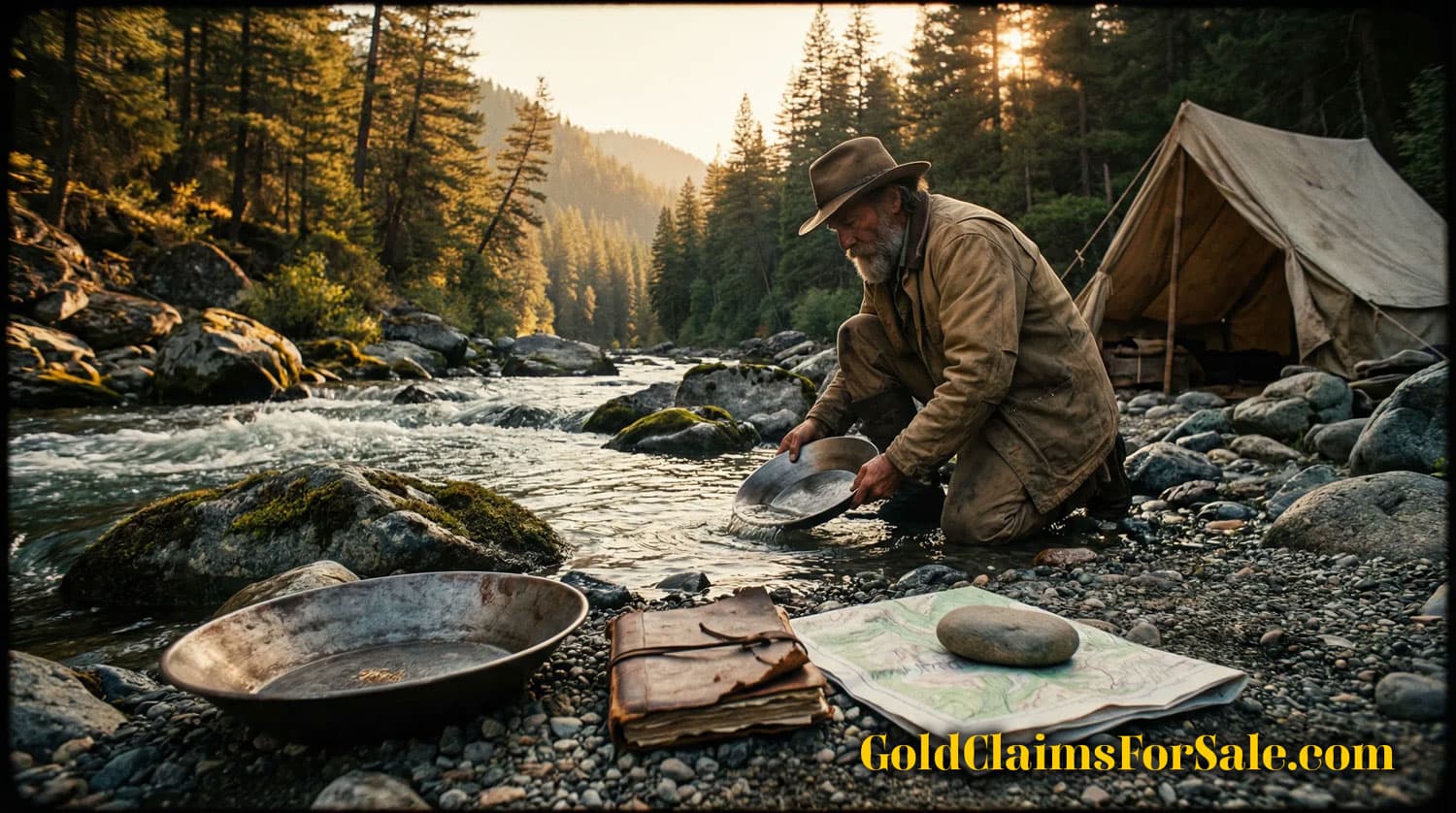
What Is Gold Mining? Unlocking the Riches — Exploring the World of Gold Mining
Gold mining — what a captivating pursuit it is. Across the centuries, this noble quest for nature's most precious metal has enticed and enchanted miners and dreamers alike.
But what exactly is gold mining? Simply put, it is the act of extracting gold from the Earth's crust. Yet, its significance extends far beyond that straightforward definition. Gold mining holds a prominent place in human history, spanning cultures and civilizations throughout time.
Its allure stems from the undeniable appeal of gold itself. Coveted for its lustrous beauty and inherent value, gold has played various roles in society. Renowned as a symbol of wealth and power, it has been used to craft exquisite jewelry adorning kings and queens, fashioned into gleaming coins circulating economies, and become an essential component in industries like electronics and dentistry due to its remarkable conductivity and malleability.
A Glimpse into Golden Ancestry
The story of gold mining can be traced back to antiquity when our ancestors first discovered glimmers of this precious metal in rivers or within rocks strewn across landscapes. The roots of gold mining dig deep into ancient civilizations — the Egyptians, Romans, Greeks, Incas, Mayans — all captivated by its brilliance.
In ancient Egypt, gold held a divine status as a symbol of immortality and was extensively used to adorn pharaohs' tombs with elaborate treasures for their journey beyond life. From there, we journey through time to ancient Rome, where extensive hydraulic engineering systems were devised by skilled engineers known as "placer miners" who sought out alluvial deposits using aqueducts for irrigation.
Across the globe in Central and South America during pre-Columbian times — the Inca Empire — a rich tapestry interwove artistry with gold mining. They meticulously crafted intricate gold jewelry and ceremonial objects that conveyed their cultural identity and magnificence.
The Formation and Occurrence of Gold
How Gold Is Formed in Nature
Gold is formed through extraordinary natural processes. It all begins deep within the fiery belly of our planet, where intense heat and pressure create the perfect conditions for gold to emerge.
Gold is primarily formed through a process called hydrothermal deposition. In this phenomenon, hot fluids rich in gold-bearing minerals circulate deep underground, seeking their path through fractures and fissures in the Earth's crust. Over time, as these mineral-rich fluids rise towards the surface due to changes in pressure and temperature, they gradually cool down. As they cool, the dissolved gold within them crystallizes and solidifies into veins or nuggets.
These veins can be found embedded within host rocks such as quartz or other minerals. The arduous journey from molten depths to glittering beauty is what gives gold its remarkable allure.
Geological Factors Influencing Gold Deposits
The occurrence of gold deposits across the globe is not a result of mere chance — it is intricately connected to certain geological factors that play a crucial role in their formation.
One significant factor is tectonic activity, which shapes our planet's landscape over millions of years. Regions with active tectonic boundaries — where continents collide or volcanic activity occurs — are often associated with substantial gold deposits.
Geological structures such as faults and shear zones provide conduits for mineral-rich fluids to flow through the Earth's crust. These structures act like highways for hydrothermal solutions carrying dissolved gold from deep-seated sources towards shallower depths where we can access them more easily.
Furthermore, specific rock types are closely linked to gold occurrence. Granite rocks that form deep underground can act as heat engines, driving fluid circulation and providing favorable environments for gold precipitation. Understanding these geological factors is crucial for gold prospectors, as it allows them to pinpoint potential gold-rich areas and optimize their exploration efforts.
Types of Gold Deposits
Placer Deposits: Alluvial and Eluvial Gold
When it comes to gold mining, placer deposits are often the first things that come to mind. These deposits are formed by the natural processes of weathering and erosion, which cause gold particles to be transported and deposited in the beds of rivers, streams, or on the surface of the land.
Alluvial deposits are those found in riverbeds or floodplains where water has carried gold particles from their original sources. This flowing water acts as a sorting mechanism, with heavier gold particles settling in certain areas due to their weight.
Eluvial deposits are similar to alluvial deposits but differ in their specific formation process. Instead of being transported by water, eluvial gold remains near its source within weathered rock formations. Over time, as weathering breaks down rocks containing gold-bearing minerals, the heavy metal is released and accumulates at or near the surface. These deposits can be found on hillsides or slopes where gravity pulls down particulate matter containing gold.
Best for Beginners
Placer deposits — especially alluvial gold in creek beds — are the most accessible starting point for new prospectors. A gold pan and a good eye for bedrock cracks is all you need to get started.
Lode or Vein Deposits: The Primary Source of Gold
While placer deposits provide enticing nuggets scattered across riverbeds, lode or vein deposits serve as the primary source for most significant gold mining operations.
Lode deposits form deep within Earth's crust through intricate geological processes that unfold over millions of years. The formation process begins with mineral-rich fluids seeping into cracks and fissures within pre-existing rocks. These fluids typically consist of hot water carrying dissolved minerals such as quartz and sulfides along with small traces of precious metals like gold.
As these fluids cool and react with their surroundings, they deposit minerals in cracks, veins, or fractures within the rocks. The resulting lode deposits can take various forms, with quartz veins being the most common — characterized by their milky white appearance and ranging in thickness from a few millimeters to several meters.
Another type of lode deposit is formed through shear zones, where intense pressure and deformation cause rocks to slip past each other, creating mineral-rich zones where concentrations of gold can accumulate.
Exploration Techniques in Gold Mining
Geophysical Methods for Prospecting
When it comes to finding potential gold deposits, geophysicists have a wide array of tools at their disposal. One such technique is magnetic surveys, which involves measuring variations in the Earth's magnetic field caused by different rock types. By conducting these surveys, geophysicists can map out areas where certain rock formations associated with gold mineralization are more likely to be present.
Another effective method is electrical resistivity surveys. This technique involves passing an electric current through the ground and measuring how resistant different materials are to that current. Since rocks containing gold often have distinct resistivity signatures compared to surrounding rocks, this method can help identify potential targets for further exploration.
Airborne Techniques: Electromagnetic Surveys and Airborne Magnetics
Sometimes, ground-based techniques may not provide a comprehensive view of large land areas or inaccessible terrains. In such cases, geophysicists turn to airborne techniques.
Electromagnetic surveys use aircraft-mounted sensors that transmit electromagnetic waves into the ground while recording their responses. By analyzing these responses, experts can detect conductive materials associated with gold mineralization buried beneath the surface.
Airborne magnetic surveying involves magnetometers mounted on aircraft that measure variations in Earth's magnetic field caused by magnetized rocks beneath the surface. Since different rock types possess unique magnetic signatures, this method helps identify structures and geological features related to potential gold deposits.
Geological Mapping and Sampling
Geological mapping plays a crucial role in gold exploration as it provides vital information about the distribution of rocks. Geologists meticulously survey an area, noting rock types, structures, and mineral occurrences. By understanding the geological context, experts can identify favorable conditions for gold mineralization. Geologists may use specialized tools such as compasses, GPS devices, and geological hammers to aid their mapping efforts.
Sampling is a critical step in gold exploration as it allows geologists to gather physical evidence for laboratory analysis.
- Soil sampling involves systematically collecting soil samples from various locations at specific depths. These samples are analyzed for trace elements or chemical anomalies that could indicate the presence of gold-bearing minerals nearby.
- Rock chip samples are collected by breaking off small pieces from exposed outcrops or freshly blasted rocks. These pieces undergo detailed analysis to identify minerals associated with gold deposits.
By combining geophysical methods with accurate geological mapping and thorough sampling, experts can optimize their chances of discovering potentially lucrative gold deposits.
Mining Methods in Gold Extraction
Open-Pit Mining: Large-Scale Extraction
Open-pit mining — also known as open-cast or surface mining — is a highly efficient method used to extract gold from large-scale deposits. This technique involves the excavation of an enormous pit in the ground where the precious metal is then extracted.
The process begins with the removal of any overlying vegetation and topsoil to expose the ore body. Once completed, heavy machinery such as excavators and haul trucks are employed to remove and transport the ore. The extracted material undergoes crushing and grinding to separate out gold particles.
Key processes involved include:
- Drilling — creating blast holes using specialized equipment
- Blasting — controlled explosives break apart large sections of rock for easier extraction
- Loading and hauling — massive trucks transport broken rock away from the pit for processing
This constant cycle ensures a continuous flow of ore throughout the operation.
Environmental Responsibility
Open-pit mining requires vast land clearance and can disrupt local ecosystems. Responsible operations invest in land reclamation — rehabilitating disturbed areas post-mining — and advanced dust-reduction technologies to minimize their footprint.
Underground Mining: Extracting Gold from Deep Deposits
When gold deposits lie deeper within the Earth's crust, underground mining becomes the preferred method. This technique involves accessing ore through tunnels or shafts, providing miners direct access to deposits located far below the surface.
Shaft mining uses vertical tunnels to transport personnel and equipment down into the mine. These shafts also serve as conduits for removing extracted ore to the surface.
Drift mining utilizes horizontal tunnels that follow along mineralized veins within the earth. Miners access these drifts and extract gold-rich materials as they progress along these pathways.
Both methods require extensive planning and engineering expertise to ensure safe working conditions while effectively retrieving valuable resources.
Key challenges in underground mining include:
- Geological instabilities — cave-ins or rockfalls require sophisticated support systems comprising rock bolts and mesh
- Ventilation — airflow must be maintained to ensure breathable air quality and remove harmful gases
- Equipment sizing — machinery must be designed with compact dimensions to fit within confined spaces while providing necessary power
Gold Processing Techniques
Crushing and Grinding: Breaking Down the Ore
One of the crucial steps in processing gold ore is crushing and grinding. This process breaks down large chunks of ore into smaller particles, facilitating further extraction of gold. Crushing involves using heavy machinery such as jaw crushers or cone crushers that apply pressure to the ore. The ore is then sent through a series of grinding mills, which use rotating drums filled with steel balls to pulverize the material further.
The purpose is twofold:
- Liberation — separating valuable gold from other minerals or impurities within the ore
- Size reduction — ensuring particles are small enough for efficient recovery
The crushed and ground ore is typically mixed with water or a leaching solution before undergoing additional processing such as cyanidation or carbon-in-pulp (CIP). These techniques dissolve gold from the finely ground ore using chemicals like sodium cyanide, followed by further purification methods to obtain pure gold.
Conclusion
Gold mining is an intricate process that involves a variety of stages aimed at extracting this precious metal from nature's grasp. From understanding its formation and occurrence in different deposits to employing exploration techniques and various mining methods — every step plays a crucial role in bringing forth this glittering treasure.
Though mining may have its environmental impacts, there is an increasing emphasis on sustainable practices within the industry. Mining companies are investing in technologies that minimize their ecological footprint through responsible waste management and land reclamation efforts.
Gold, with its captivating allure and enduring value, continues to be a symbol of wealth and prosperity. Its journey from deep within the Earth's crust to the refined bars we cherish is a testament to the ingenuity and perseverance of humankind.
Brought to you by GoldClaimsForSale.com — the premier directory for gold claims for sale across 11 western states.
Eric Schultz
Professional Gold Prospector
Expert contributor to Gold Claim Filing Service, providing insights and guidance on gold mining claims, BLM regulations, and prospecting best practices.